The Opportunity Navigation System
A structured approach to helping people navigate opportunity through connections.
Economic and social well-being don’t happen by chance. They happen when people understand the importance of connections and take intentional action within them to generate opportunity and thrive.
The Opportunity Navigation System helps programs and participants do exactly that by making connection access visible, actionable, and sustainable.
What Is Opportunity Navigation?
Opportunity navigation is the ability to understand and act on access to the people, organizations, and institutions that shape employment, advancement, and long‑term outcomes.
Most workforce and youth development measure and teach skills, credentials, and work-readiness. Those matter but many youth and adults now earn degrees and certifications and still struggle to turn them into quality jobs, while employers struggle to find and retain prepared talent.
Many human service systems also face challenges with coordination and access. In practice, frontline workers and the individuals they serve often do not have clear, active connections to the other agencies, organizations, and institutions that support stability and progress. Referrals are frequently made with good intentions but limited follow-through, placing additional strain on staff and leaving participants unsure how to navigate next steps. This fragmentation can affect not only employment outcomes, but also social well-being, contributing to stress and isolation. Opportunity navigation helps address this gap by making access more visible, intentional, and easier to act on across systems.
How the Opportunity Navigation System Works
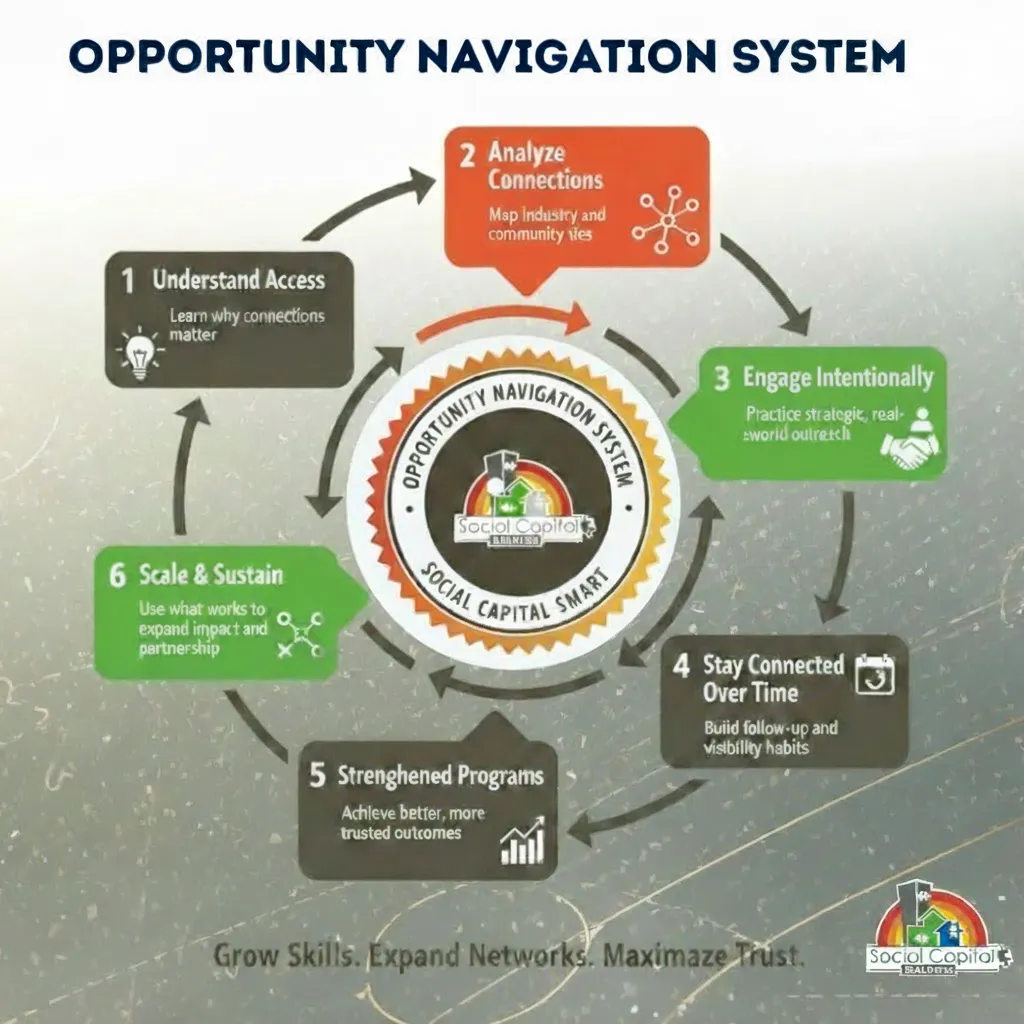
The system follows a clear progression. Each stage builds on the last, giving programs and participants shared language, shared insight, and guided action without relying on proprietary platforms or risky data practices. It gives organizations a repeatable way to teach social capital building, support participants as they apply it, and use data to improve outcomes rather than assume access exists.
Instructor Preparation and Delivery Support
Opportunity Navigation is designed to be taught, supported, and reinforced, not dropped into a program and hoped for.
Staff participate in instructor preparation and certification where they learn the system, the student experience, and how to guide participants through common barriers such as fear of outreach, low confidence, or stalled engagement.
After training, instructors are supported through structured implementation check ins focused on delivery quality, participant momentum, and practical problem solving.
Student Platform and Network Analysis Tools
Participants receive access to the Opportunity Navigation System and its digital tools that help them understand the meaning and importance of industry and community connections , identify key industry and community stakeholders, map current access, track connections, and practice consistent engagement. Moreover AI and personal coaching tools assist them in doing so.
The system removes guesswork by giving participants a clear path and giving instructors visibility into progress rather than relying on self reports or end of program outcomes alone.So
Organizational Certification and Impact Review
Organizations pursuing Opportunity Navigation certification demonstrate that leadership is actively reviewing data, meeting with instructors, and using insights to strengthen delivery. Data is not collected for compliance but analyzed to understand what is working, where access is growing, and where participants are getting stuck.
Certification signals that the organization is not only offering opportunity focused programming, but is intentionally managing access outcomes.
THE JOURNEY
1. Understand Connection Access
Participants and staff develop social capital literacy, learning why connections matter, what centrality means in practical terms, and how access to people and institutions influences opportunity.
2. Analyze Existing Connections
Through guided social network analysis, participants and staff identify direct and indirect ties to relevant industries and community stakeholders, recognize gaps, and uncover untapped access points.
3. Practice Real-World Engagement
Participants and staff apply insight through community-connected learning, engaging connections in low-risk, purposeful ways while developing awareness of impressions, consistency, and professionalism.
4. Stay Engaged Over Time
Participants and staff are supported in sustaining engagement using everyday tools they already have email, calendars, and shared documents, .building habits that extend beyond the program.
5. Strengthen Program Insight
Programs gain visibility into how participants are engaging connections, where access is increasing, and how connection behavior relates to employment and advancement outcomes.
Who Uses the Opportunity Navigation System
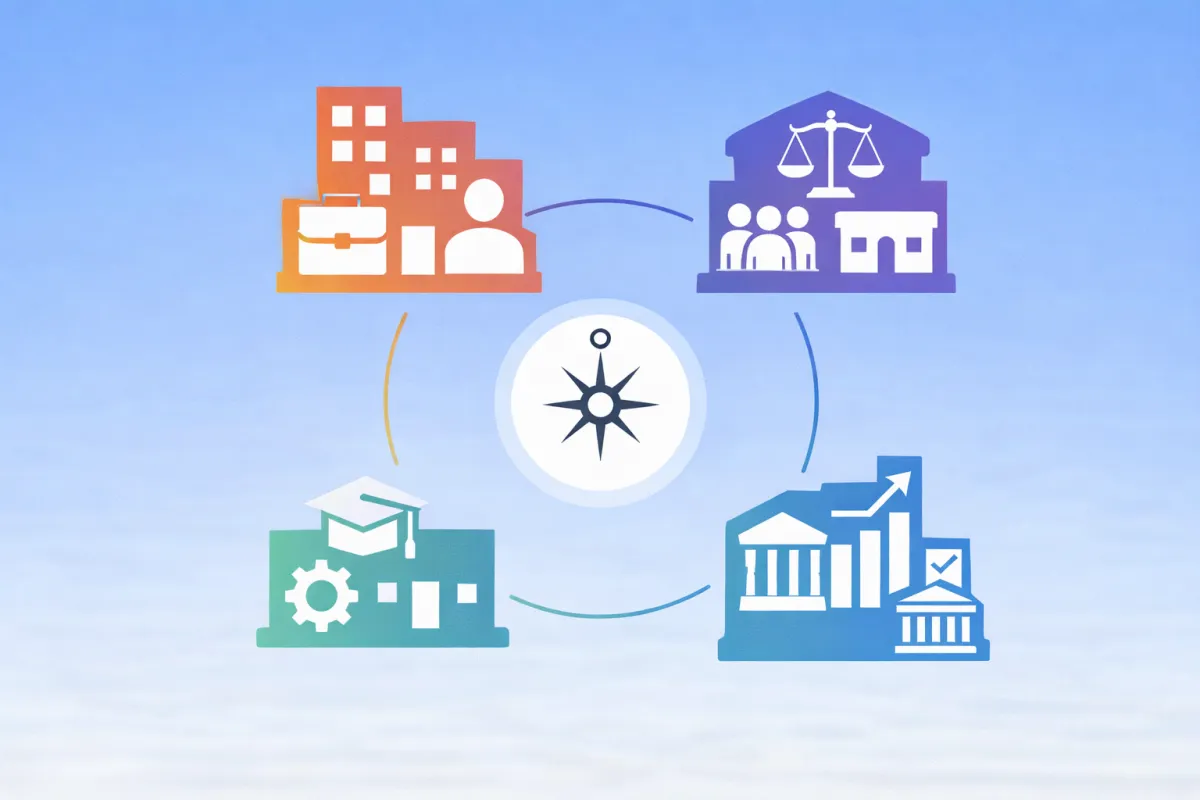
Workforce and Youth Development Programs
Justice, Reentry, and Community-Based Organizations
Employers and Economic Development Initiatives
Schools and Systems
Funders and Policymakers Seeking Outcomes Beyond Placement